
Lean management at the university? Impulses for greater flexibility, better processes and a new mindset
Workshop report
How can universities become more flexible, processes meaningfully improved, and changes sustainably embedded within the organization? These were the questions addressed by participants in our recent QuIS_Flex meta-workshop. The workshop focused on two keynote presentations by Ralf Volkmer, a renowned expert in Lean Management from Lean Knowledge Base UG, followed by intensive discussions in working groups in the afternoon.
Lean management – more than just “lean processes”
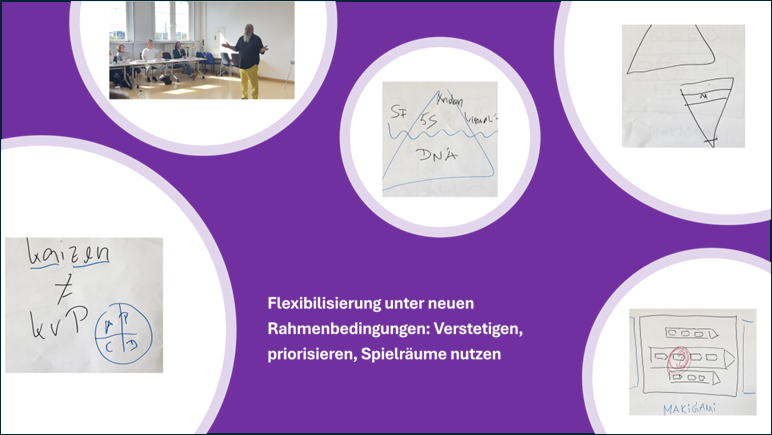
In the first keynote address, Ralf Volkmer introduced the fundamentals of Lean Management. The term originates from observations made by three American scientists, James P. Womack, Daniel T. Jones, and Daniel Roos, who visited Toyota factories in the late 1980s and 1990s. What they found there was revolutionary for the time: tidy workspaces, extensive visualization, intensive communication among employees, and the ability to stop the production line in case of irregularities without incurring financial losses. These observations were later summarized under the term Lean Management and are still 5S methodology and Shopfloor Management (SFM) reflected
A key message: Lean management cannot be imposed "from above." Change only succeeds when employees are given freedom and space to experiment, where they can shape the process themselves. According to Volkmer, Toyota turns the classic corporate pyramid on its head – customers are at the top, with management at the bottom. Hierarchies are not an obstacle; what matters is a clear direction.
His conclusion: Lean management is neither about efficiency nor digitalization, but about effectiveness. Those who want to improve need time – those who don't have time cannot improve.
Understanding processes – and shaping them together
The second keynote address focused work organization . Volkmer distinguished between value-adding processes, which provide direct benefits to the customer, and non-value-adding processes, which, while not strictly necessary, are performed for legal reasons. Real improvements only occur when a process is considered in its entirety – optimizing individual steps is not very effective if the actual problem lies in upstream or downstream processes.
Volkmer made a strong case for "learning by doing": working together, in person, on a concrete solution. In his facilitations, he deliberately avoids acting as a provider of solutions, instead guiding participants through targeted questions and always returning responsibility to them. In the subsequent discussion, his advice on many issues was: don't get stuck in structures, but have the courage to actually examine processes – and simply get started.
The afternoon: From impulse to one's own university reality
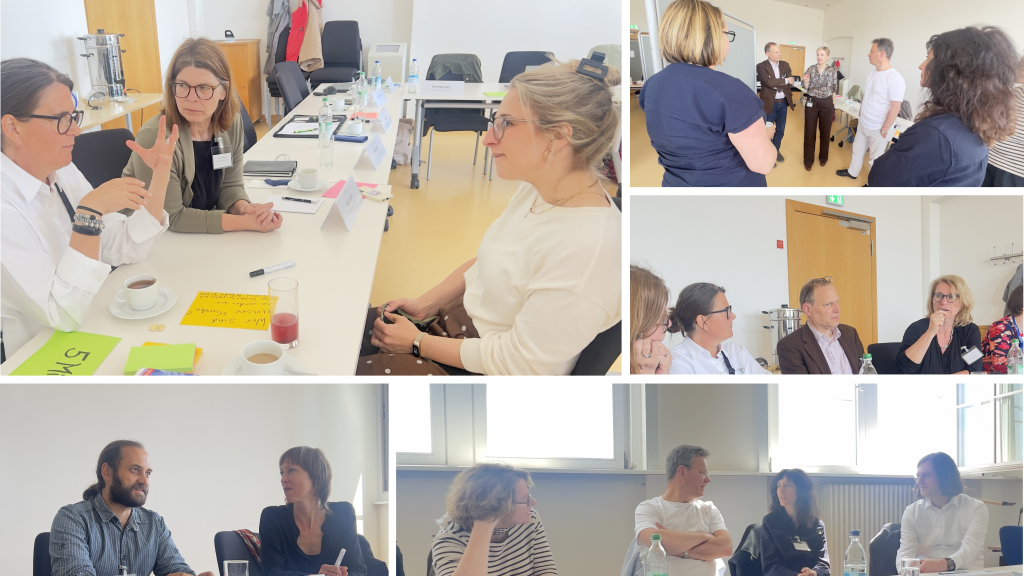
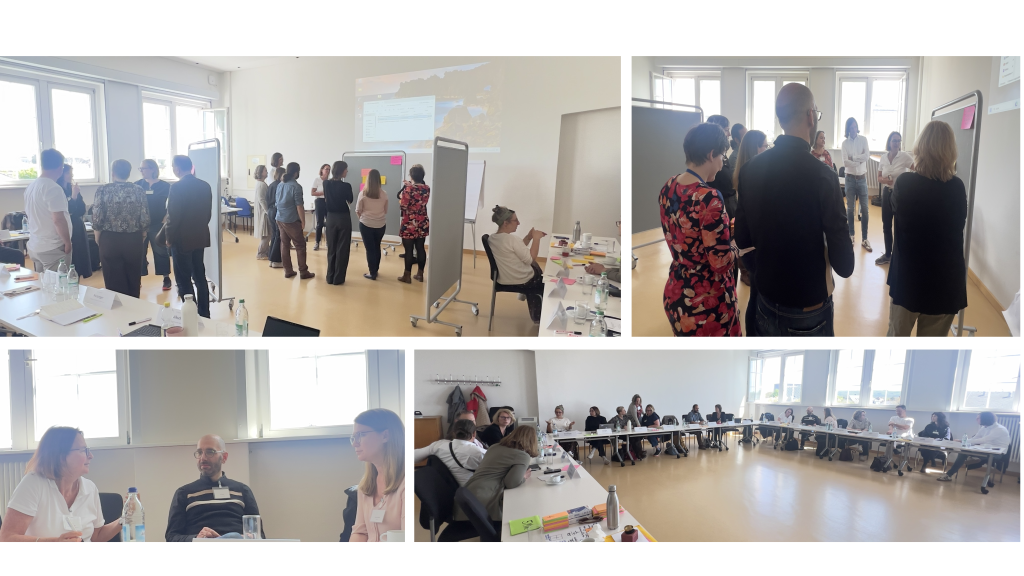
The participants used the afternoon to apply the insights gained to their own university practice. They worked in three groups on the following questions:
- How can the mindset within departmentsand university presidentsbe changed? Discussions focused on topics such as security and trust as a foundation, the willingness to delegate and assume responsibility, and the building of coalitions instead of isolation.
- How does one begin – and with which processes?An honest assessment of the current situation was identified as the starting point, ideally supported by an external perspective. Points of failure, staff changes, or existing pressures could be reasons to question processes.
- Who are our customers, exactly? The university's goals and key stakeholder groups were reflected upon – from students to researchers and teachers, as well as society, politics and employers.
Conclusion
The workshop made one thing clear: Lean management is far more than a set of methods for process optimization. It's an attitude – characterized by trust, participation, and a willingness to continuously improve. This perspective offers particularly exciting points of connection for universities with their complex structures and diverse stakeholders.
Picture gallery
Photos: Prof. Dr. Claudia Schmeink
Contact person in
Dr. Astrid-Solveig Loubal, coordination quis_flex-meta