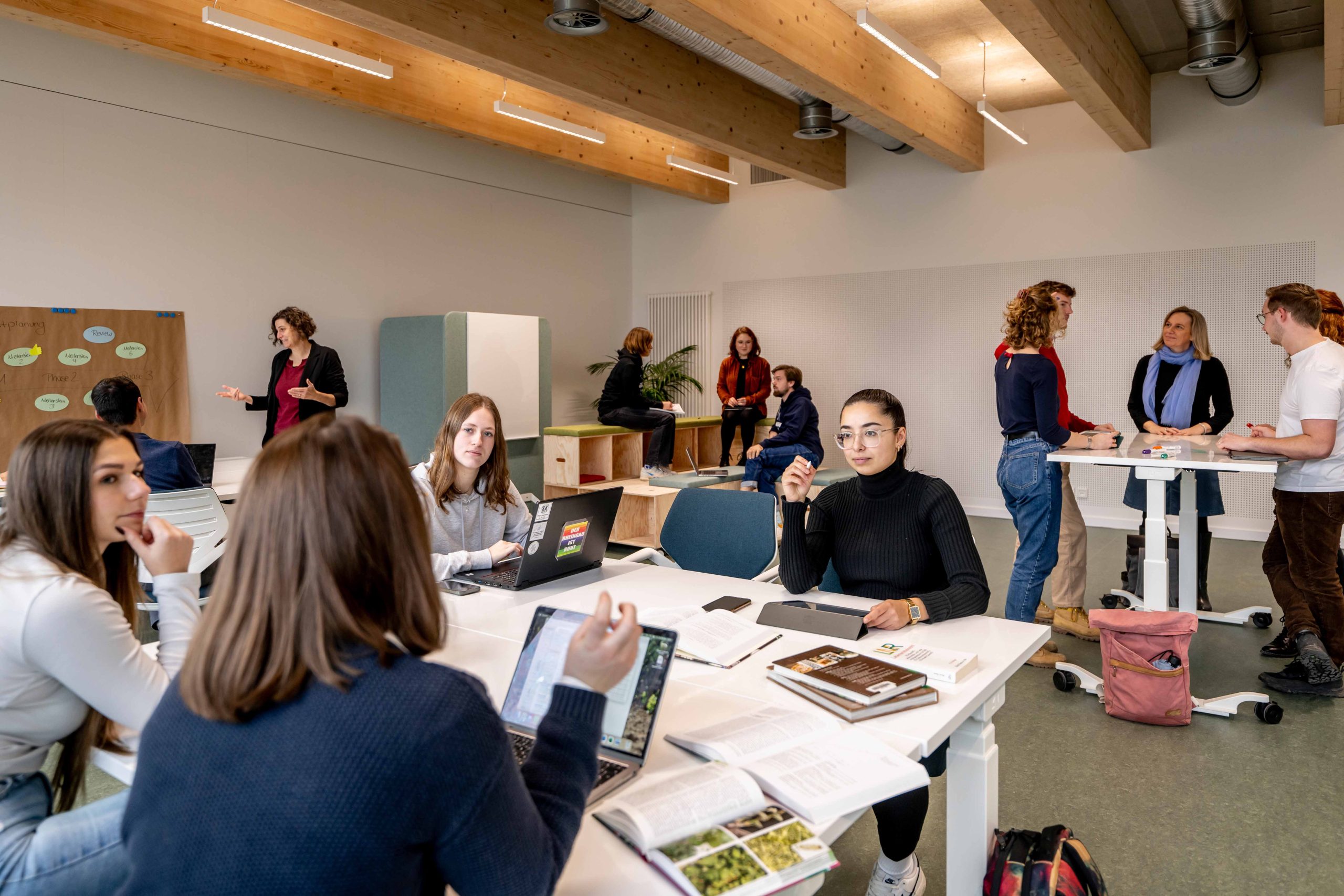
Science up close: The proven concept of GO practical projects. At the heart of the Goethe Orientation Studies (GO) program in the natural and life sciences is the gathering and reflection of personal experiences to make a well-informed and sustainable choice of study program. The GO practical project brings abstract concepts such as "everyday research" and "key academic skills" to life: What does it feel like to be part of an interdisciplinary team of experts? Here, students learn to delve into complex topics as early as their first and second semesters. Together with more advanced peers, they define research questions and develop solutions for real-world
problems – across disciplines, with a practical focus, and on equal footing.
Student LifeCycle: Starting your studies
Target group: Prospective students, first-year students, lecturers and staff at universities
University: Goethe University Frankfurt
To enable first-year students to make an informed decision about their future field of study, the GO (Gymnasium Oberursel) focuses on experience, exchange, and reflection during its two-semester orientation phase. This approach addresses a wide range of orientation needs individually. In addition to developing competencies, the GO emphasizes research-oriented and interdisciplinary approaches from the outset, ensuring that the choice of subject is well-informed and based on sound reasoning.
A proven concept for establishing this practical connection is the GOpractical project. The motto here is: Out of the lecture hall, into practice!
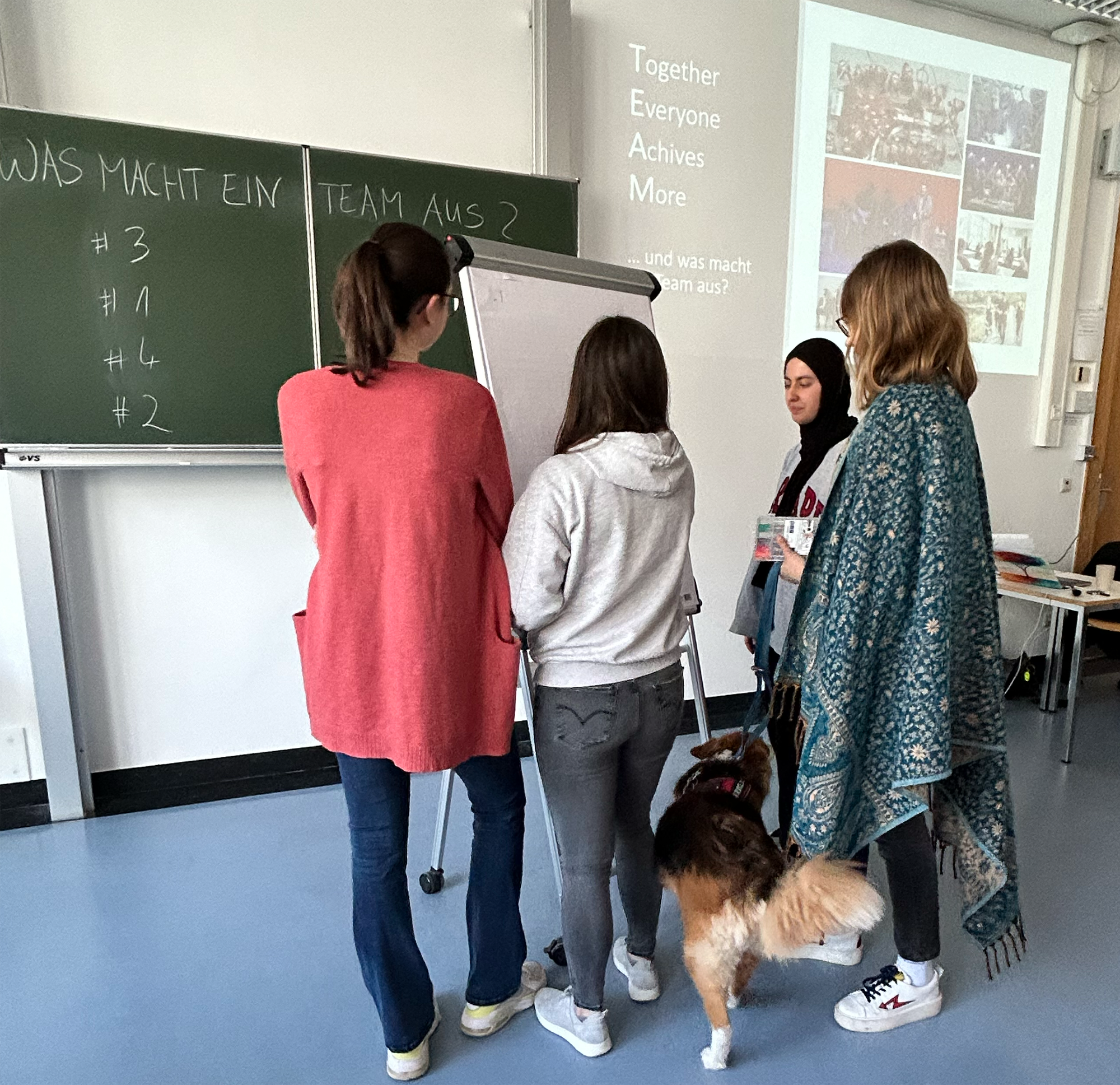
The GO practical project leverages the diversity of its students as a strength. In this module, first-year students work hand in hand with experienced Bachelor's and Master's students from various disciplines. This mix simulates the reality of academic teams: fresh curiosity meets advanced expertise. Participants experience unfamiliar academic cultures and gain a new perspective on their own role. In an atmosphere where teamwork is valued more than competition, new horizons of thought are explored. Students learn how important it is to find a common language, to be open to the unfamiliar, and to narrow down complex topics into manageable questions.
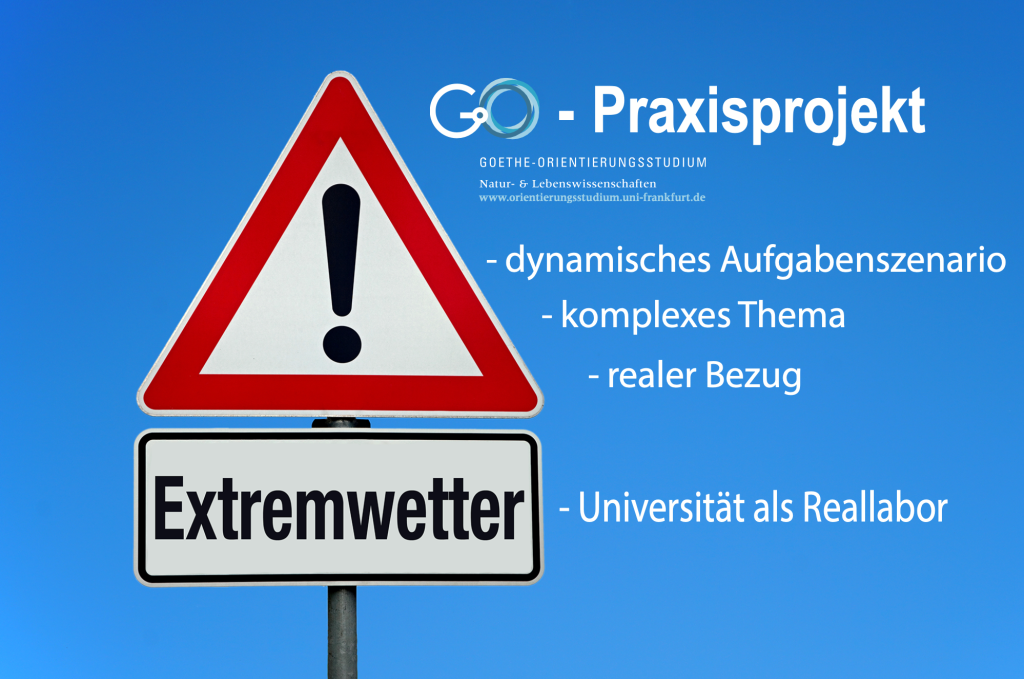
With the aim of making everyday research tangible, the university becomes a real-world laboratory in a dynamic task scenario. Commissioned by a fictitious university committee, students, working in expert teams, develop well-founded recommendations for action in response to real-world challenges. While the scenario provides the framework, the teams independently decide on their project focus and plan their undertaking according to the project triangle of objective, resources, and time.

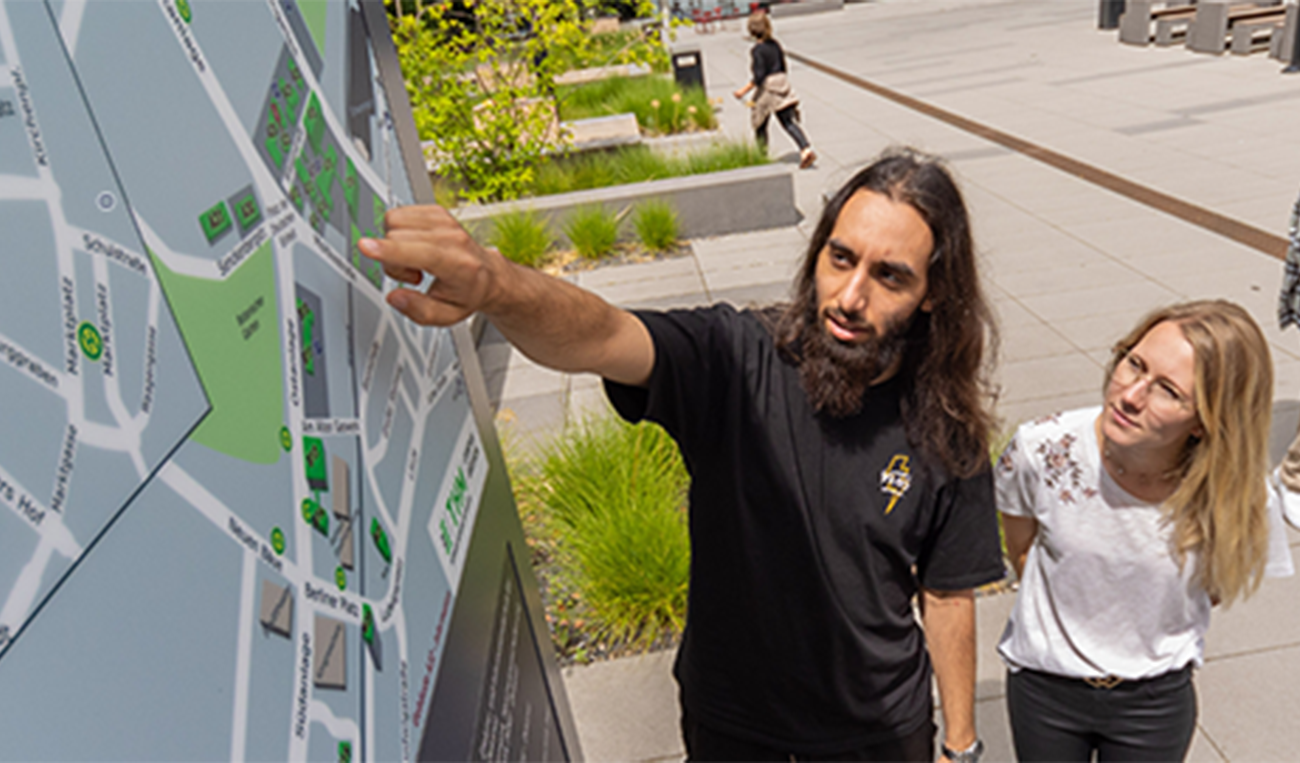
This process becomes particularly vibrant through interaction with the university's "real-world" system. To validate their strategies, the teams actively seek expert advice from various departments—for example, from building management regarding heat protection measures or from researchers analyzing soil conditions. The day-to-day realities of the project become even more tangible when expert feedback or research findings challenge the initial plans. The fact that the teams must respond with flexible adjustments reflects the true reality of research. The concrete results of these practical projects demonstrate that student research can have a direct, positive impact on university operations.
Infographic: Max Mustermann
– Students in their second semester
Lorem ipsum dolor sit amet, consetetur sadipscing elitr, sed diam nonumy eirmod tempor invidunt ut labore et dolore magna aliquyam erat, sed diam voluptua. At vero eos et accusam et justo duo dolores et ea rebum. Stet clita kasd gubergren, no sea takimata sanctus est Lorem ipsum dolor sit amet. Lorem ipsum dolor sit amet, consetetur sadipscing elitr, sed diam nonumy eirmod tempor invidunt ut labore et dolore magna aliquyam
Dr. Bianca Bertulat | bertulat@em.uni-frankfurt.de
Tel.: 069-798-29455
B. Bertulat